
The Dutch style is distinct among aquascaping styles. Unlike Nature or Iwagumi styles, which focus on hardscape materials like rocks and wood, the Dutch style relies almost exclusively on aquatic plants to create depth, contrast, and visual interest.
Historical Context
Originating in the Netherlands in the 1930s, this style pre-dates typical modern aquascaping. It shares principles with flower arranging, specifically underwater. The focus is on the arrangement of plants, utilizing their diverse colors, leaf shapes, and growth heights to strictly defined rules.

Core Principles
- The Rule of Thirds: The tank is visually divided into nine equal segments. Focal points should lie at the intersections of these lines.
- Contrast: Essential for separating groups of plants. Place fine-leafed plants next to broad-leafed ones, and red plants next to green ones.
- Terracing: Creating "streets" of plants that rise from the front to the back creates an immense sense of depth.
Choosing the Right Plants
Stem plants are the bread and butter of this style. Some classics include:
"The aquarium is not a slice of nature, but a piece of art."
Key species to consider:
- Lobelia cardinalis (for Dutch streets)
- Alternanthera reineckii (for bold red contrast)
- Rotala rotundifolia (for background bushiness)
Maintenance and Fertilization
Because of the high plant mass, nutrient consumption is extreme. A robust dosing regime is non-negotiable. Our Flora Multi NPK is specifically designed for these high-uptake environments, providing a balanced ratio of macronutrients to prevent algae while fueling rapid stem growth.
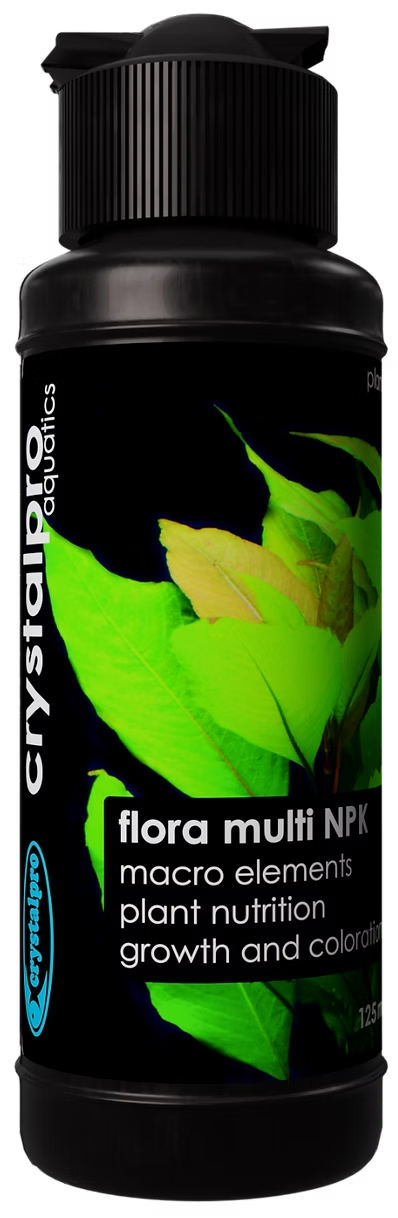
Recommended for Dutch Style
Rich in Nitrogen and Potassium to support dense stem growth.
View Product arrow_forwardPruning is an art form in itself. In Dutch tanks, you must frequently trim to maintain the clearly defined groups. Letting plants overgrow destroys the intended geometry and shading can cause lower leaves to die off.